
Lorem ipsum
Brought together by fate and marked by abuse and destruction, the ‘Berlin sculpture find’ discovered in 2010 during archaeological investigations opposite the Red Town Hall has become a world-famous symbol that, more poignantly than many intact works of art, illustrates the persecution of modern art by the Nazi dictatorship. After numerous exhibitions in Germany and abroad, it is now on display in Berlin for the first time.
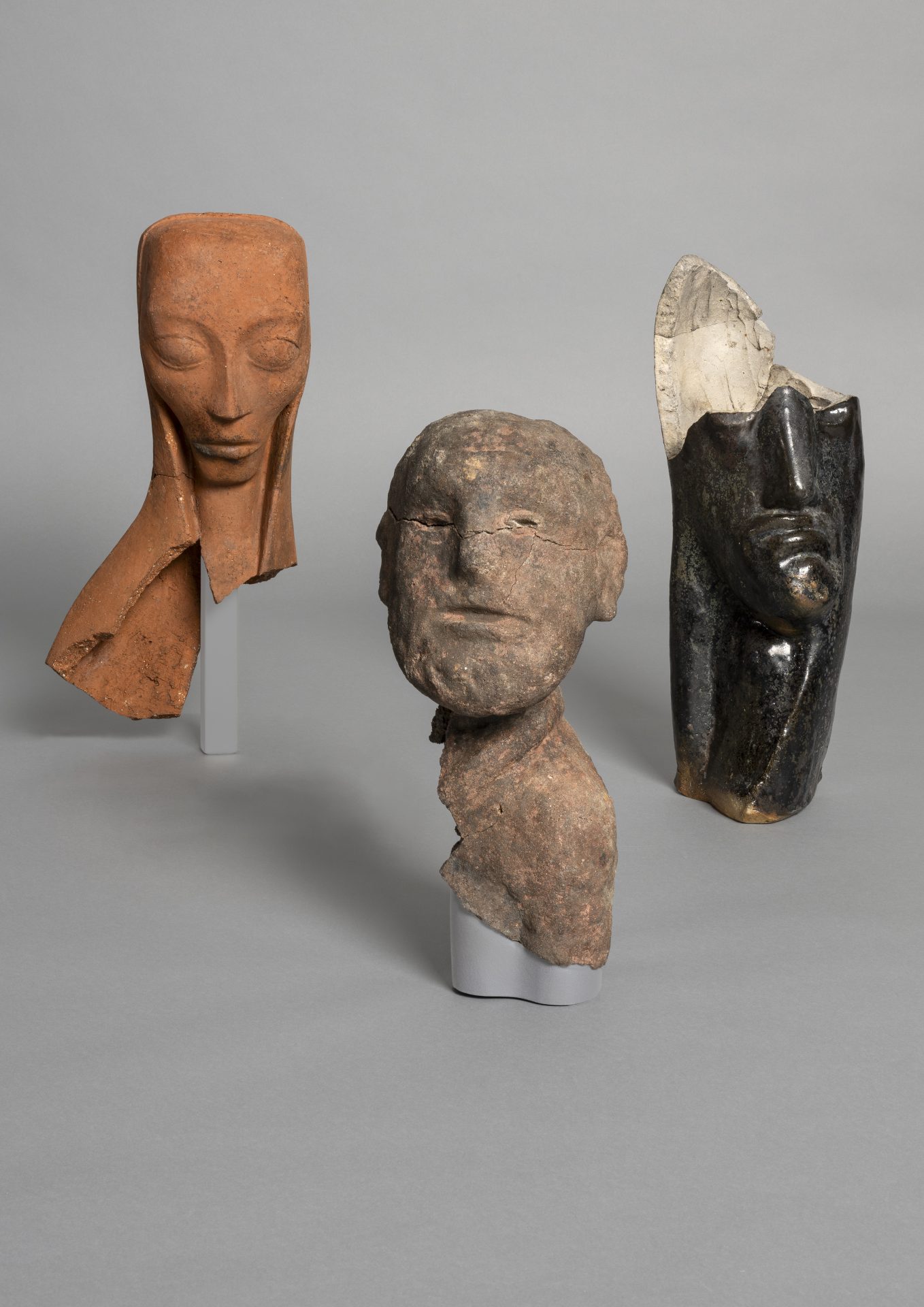
The discovery and mystery of the ‘Berlin sculpture find’
Königstraße, now Rathausstraße, was once densely built-up and, until the war, was one of Berlin’s liveliest residential and commercial streets. Before the construction of the new underground station at the Rotes Rathaus, extensive excavations took place here from autumn 2009 onwards. During the excavation of the cellars of the war-damaged house at Königstraße 50 in 2010, sixteen sculptures were discovered in the bomb debris. The relationship between the artworks and the site where they were found was initially completely unclear. However, the surprising results of the archaeological, historical and art-historical research soon made international headlines.
With the identification of Emy Roeder’s ‘Pregnant Woman’ in September 2010, the mystery of the excavation finds began to be solved. Created by fourteen artists between 1913 and 1933, all sixteen sculptures belonged to the collection of ‘degenerate art’ confiscated from German art museums in 1937, seven of which were presented in a defamatory manner at various stops of the propaganda exhibition of the same name. Their display has been partially documented photographically. The spectacular rediscovery of these works of art, which were believed to be lost, also brings into focus the archaeology of modern times, which has gained immense importance in recent years as a source for reconstructing historical events.

Back in Berlin
With the presentation of the find in the Greek Court of the Neues Museum, the sculptures have been a media event since November 2010. As Berlin archaeological finds, they were transferred to the Museum of Prehistory and Early History, where they are still kept today. Following an examination of their legal status, the works of art became the property of the Federal Republic of Germany in 2012.
Since 2012, the ‘Berlin Sculpture Find’ has been shown at fifteen locations in Germany and Luxembourg as part of special exhibitions. In addition, groups or individual works are regularly loaned out domestically and abroad, most recently for the major special exhibition ‘L’art dégénéré’ at the Musée Picasso in Paris. With the new exhibition at PETRI, the new home for Berlin archaeology, the find is being presented in context and not far from where it was discovered for the first time since 2019.

Accompanying booklet
The exhibition is accompanied by a free brochure that you can take with you, featuring short biographies of the artists and presenting the artworks with their eventful history.
A special exhibition by the Museum of Prehistory and Early History of the State Museums in of Berlin.